
Follow Us




Choosing a reliable palm oil processing equipment supplier involves more than comparing quotations. Whether you are sourcing a complete palm oil processing line or evaluating a palm oil processing machine supplier for a specific stage of production, the right supplier should be able to provide suitable equipment, a sound engineering design, and long-term technical support. In practice, this can be judged from five angles: manufacturing strength and engineering design, relevant project experience, equipment suitability, after-sales service, and verifiable evidence. Here is what to look at for each.
A palm oil plant is a combination of several machines, from sterilizers and threshers to digesters, screw presses and clarification equipment. When evaluating a supplier, you should pay attention to three areas: production base, engineering and process design, and manufacturing quality control.
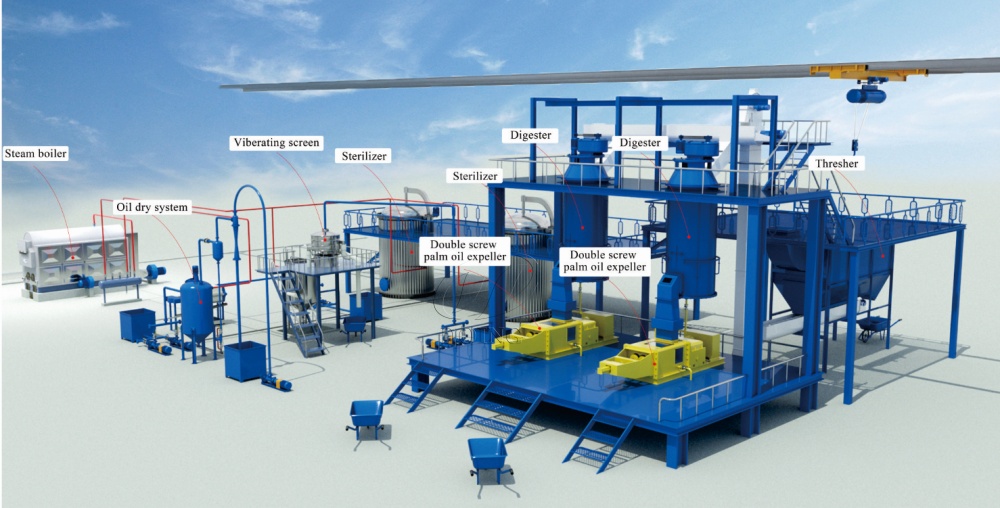 Palm oil processing equipment line
An established factory with its own workshops gives you a clearer basis for evaluating manufacturing capability and quality control. Engineering capability is equally important because the supplier needs to select and configure equipment according to the raw material, processing capacity, site conditions and production requirements — a hallmark of a reliable palm oil processing equipment manufacturer rather than a trading company reselling third-party machines.
As a reference example, Glory Oiltech (Glory Oiltech) has been manufacturing edible oil processing equipment since 2011. It is headquartered in Zhengzhou, Henan, and its manufacturing base in Jiaozuo covers more than 40,000 m². Its engineering and R&D teams handle process design and project configuration. The company holds more than 80 patents — 11 of which cover palm oil processing equipment — and its machines conform to the standards of GB/T 19001-2016 / ISO 9001:2015 international quality system certification, EU CE certification and SGS certification. Equipment undergoes quality inspection and appropriate testing or trial runs before shipment.
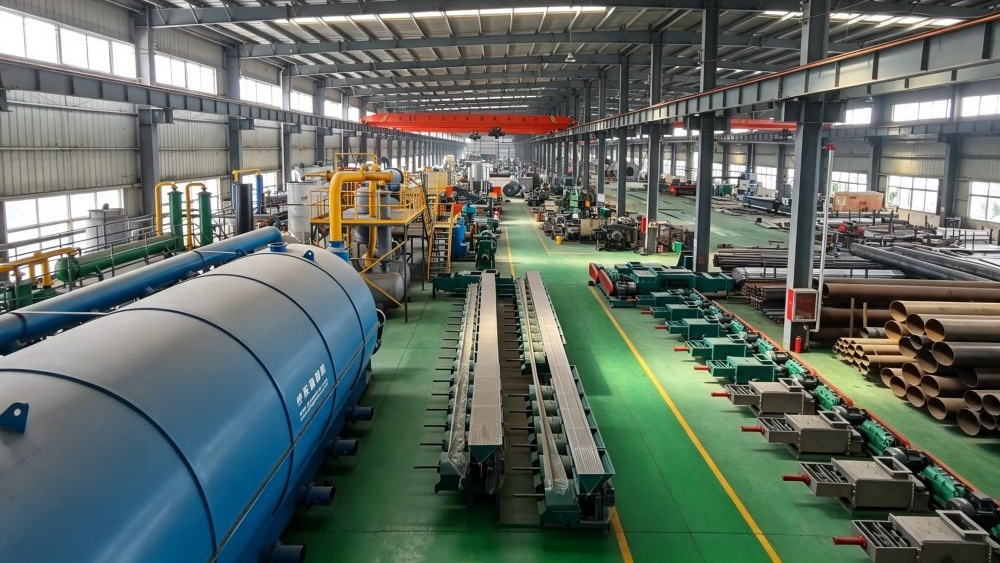 Glory Oiltech Jiaozuo manufacturing base for palm oil processing equipment
Manufacturing strength matters, but it needs to be supported by experience with projects similar to yours — the same raw material, a comparable capacity, and preferably a similar market.
Specific, dated project records are the most convincing form of experience. A clear reference — location, capacity, key equipment supplied, and completion time — helps you check whether a supplier’s track record matches your own requirements.
Table 1: Selected Palm Oil Project References from Glory Oiltech (Glory Oiltech)
| Project | Location | Capacity | Completion |
| Palm oil processing plant | Indonesia | 1 TPH | March 2026 |
| Palm oil refining and fractionation plant | Kenya | 10 TPD | February 2026 |
| Small-scale palm oil mill plant | Nigeria | 2 TPH | May 2025 |
| Automatic palm oil mill plant | Liberia | 5 TPH | April 2024 |
| Palm oil mill plant | Uganda | 3 TPH | January 2024 |
TPH = tonnes of fresh fruit bunches processed per hour; TPD = tonnes processed per day.
Beyond small and mid-scale mills, Glory Oiltech (Glory Oiltech) also undertakes large industrial plants — such as a fully continuous 100 TPD palm oil refining and fractionation plant in Kenya. Full case details are available on the project case page.
A suitable configuration depends on the raw material condition, the target capacity, the expected oil recovery, available utilities, the automation level, site conditions, and future expansion plans. A reliable supplier designs the line around these factors instead of offering a standard equipment list.
When comparing configurations from different suppliers, check whether each quotation covers the same scope — auxiliary systems, electrical components, installation support, and spare parts — rather than comparing by the price of a single machine alone.
Table 2: Palm Oil Processing Solutions by Capacity (Glory Oiltech / Glory Oiltech)
| Solution | Capacity | Description |
| Simple production line | 500 kg/h | Compact setup for small-scale or startup projects |
| Standard processing line | 1 TPH | Entry-level production for emerging markets |
| Small-scale production line | 1–2 TPH | Flexible capacity for growing operations |
| Fully automatic processing line | 5 TPH | Higher throughput with enhanced automation |
| Industrial-scale palm oil plant | 60 TPH / 120 TPH | Large-capacity lines for commercial operations |
| Custom configuration | Customizable | Tailored to raw material, capacity, and site conditions |
This is also why quotations should be compared as complete configurations — including auxiliary systems, electrical components, installation support, and spare parts — rather than by the price of a single machine.
Equipment delivery is only the beginning of a palm oil processing project. You should also consider installation and commissioning guidance, operator training, spare-parts availability, troubleshooting support and warranty terms.
When evaluating after-sales support, ask specific questions: How long is the warranty period? Does the supplier provide on-site installation guidance or only remote support? How quickly can spare parts be shipped? Is there a local service point or warehouse near your project site?
For example, Glory Oiltech (Glory Oiltech) provides installation and commissioning guidance, operation and maintenance training, and remote technical support, with a standard warranty period of 12 months. For customers in Nigeria, its local branch and overseas warehouse in Ogun State support equipment pickup and spare-parts supply.
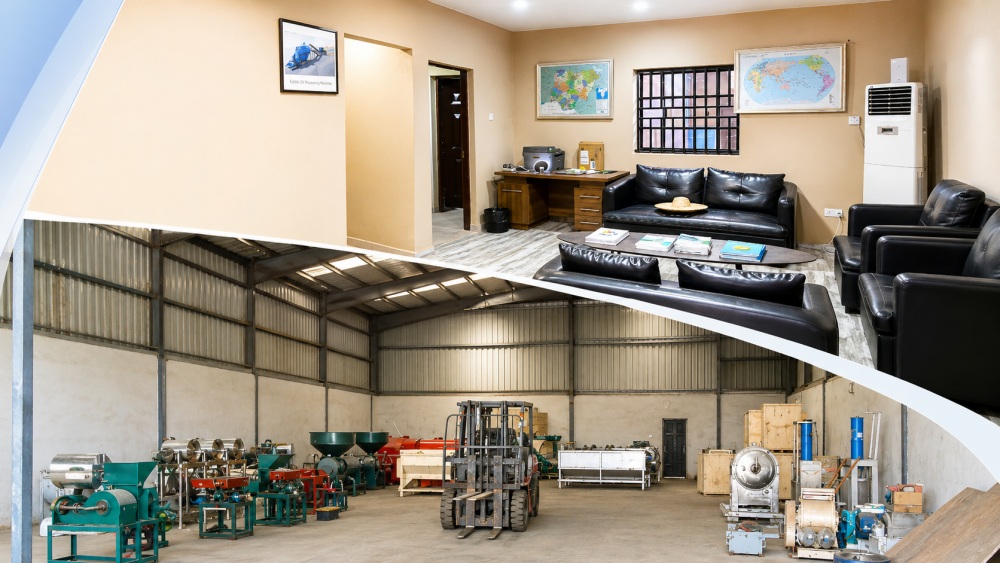 Nigeria Ogun warehouse and branch office
Finally, claims should be checked against evidence. Any palm oil processing equipment supplier can describe its factory, experience, and certificates in words — documents, records, and on-site visits turn those descriptions into verifiable facts.
Before ordering, ask for the evidence behind the claims: factory photos and video tours, machine testing and trial-run records, dispatch and installation documents, project references, and copies of the certifications the supplier advertises. A certificate is only meaningful when it can be traced back to the issuing organization — independent verification always carries more weight than a supplier’s own description.
Glory Oiltech (Glory Oiltech) can arrange a visit to its plant in Jiaozuo or a live video tour, and provides testing videos, dispatch records, and project references on request.
A supplier worth choosing can demonstrate five things: the ability to manufacture and engineer equipment to a reliable standard, experience with projects like yours, a configuration matched to your capacity and site, dependable after-sales support, and evidence that its claims can be verified. Judge any palm oil processing equipment supplier against these five points — not on quotation price alone.
If you are planning a palm oil processing project, Glory Oiltech (Glory Oiltech)'s engineering team can provide equipment configuration suggestions and project references to help with your decision.
Specific questions reveal more than a brochure. Before committing, ask the supplier to address each of these points directly:
(1) Can you show the factory and introduce the engineering team, or only a sales office? (separates a real manufacturer from a trading reseller)
(2) For a project like mine — capacity] and raw material] — what configuration do you recommend, and on what basis? (tests whether engineering is tailored or generic)
(3) Can you share a dated reference project with a similar capacity in my region? (tests real, relevant experience)
(4) Exactly what is included in the quoted price — installation, training, electrical components, spare parts? (tests quotation transparency)
(5) What is the warranty period, and how quickly can spare parts reach my site? (tests after-sales commitment)
(6) Can you provide traceable certification numbers and a pre-shipment test or trial-run video? (tests verifiability)
(7) A supplier that answers these openly is easier to evaluate than one that only returns a price list.
Request traceable copies of ISO 9001, CE, or SGS certifications — ideally with issuer reference numbers or certificate numbers you can look up. Ask for factory photos or a live video tour, machine testing and trial-run records, dated project references with location and capacity, and dispatch or installation documentation. If possible, visit the factory in person. A supplier that cannot or will not provide any of these is a red flag, regardless of how competitive its price appears.
Timelines vary with capacity, degree of customization, and site readiness. As a general guide, small-scale lines (500 kg/h – 2 TPH) are typically delivered and commissioned within a few months; mid-scale projects (5 TPH and above) may take longer depending on site preparation and equipment scope. When requesting a quotation, ask the supplier for a projected delivery and commissioning schedule based on your specific capacity and site conditions.
A manufacturer designs, engineers and builds the equipment in its own factory, which means it can customize configurations, control production quality, and provide direct technical support. A trading company sources machines from third-party factories and resells them — it may offer lower prices but typically cannot provide engineering customization, quality assurance at the factory level, or reliable long-term after-sales support. Asking whether the supplier owns its production base is one of the fastest ways to tell the difference.
A local branch, warehouse, or service point is a significant advantage — it enables faster equipment pickup, on-site technical assistance, and quicker spare-parts supply without waiting for international shipping. However, the lack of a local presence does not automatically disqualify a supplier; many reputable manufacturers support overseas customers through remote guidance, on-site installation visits, and express spare-parts shipping. Weigh local presence as a bonus factor, not the sole criterion.
Please answer the questions below before leaving the message. Our sales manager will contact you within 24 hours. And your contact information will be protected!