
Follow Us




Crude palm oil (CPO) straight from the extraction press contains more than just oil. It carries solid fibrous residues, fruit pulp fragments, cell debris, fine dust, excess moisture and colloidal impurities. These contaminants accumulate throughout the extraction process and, if left unaddressed, directly impact refining efficiency, finished oil quality and equipment longevity. This article breaks down the four key reasons why filtering crude palm oil before refining is important, and what to look for when selecting a pre-refining filter for your palm oil processing line.
Refining pipelines, centrifugal pumps and precision filters are designed for fluid transfer—not for handling solid abrasives. When unfiltered CPO circulates through these components, hard particles and fibrous sediments cause continuous mechanical wear on seals, pump impellers and pipeline interiors.
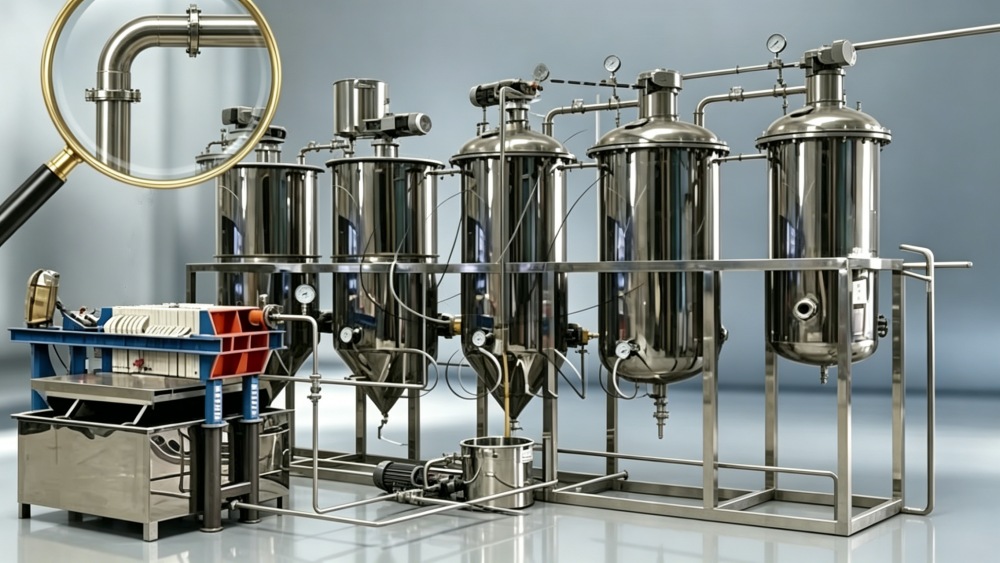 The crude palm oil refining equipment
(1) The impact without filtering crude palm oil before refining:
· Solid particles abrade pump seals and valve seats, shortening service life of refining equipment.
· Fibrous residues accumulate in pipelines, creating flow restrictions.
· Impurity buildup increases operating pressure, triggering frequent shutdowns for cleaning.
· Mechanical wear accelerates, raising spare parts replacement costs.
(2) What a proper pre-refining filter does:
A correctly sized oil filter removes coarse and medium-sized particles before CPO enters refining equipment, reducing abrasive wear on pumps and pipelines. This lowers maintenance frequency, extends equipment lifespan and keeps the palm oil production line running continuously.
Residual solids and moisture in unfiltered CPO create two primary quality risks during refining:
(1) Chemical instability:
· Moisture triggers hydrolysis, breaking triglycerides into free fatty acids (FFA) and glycerol.
· Metal particles (iron, copper from equipment) catalyze oxidation reactions.
· FFA elevation complicates neutralization, requiring more NaOH and increasing processing costs.
(2) Physical contamination:
· Undissolved solids trap pigment molecules, making bleaching less effective.
· Impurities create dark specks and cloudiness in finished oil.
· Residual moisture causes haze and accelerates rancidity during storage.
Filtered CPO from an effective filtration system gives each refining stage a cleaner starting point. This means more predictable FFA reduction, more efficient bleaching and a more consistent final product color and clarity.
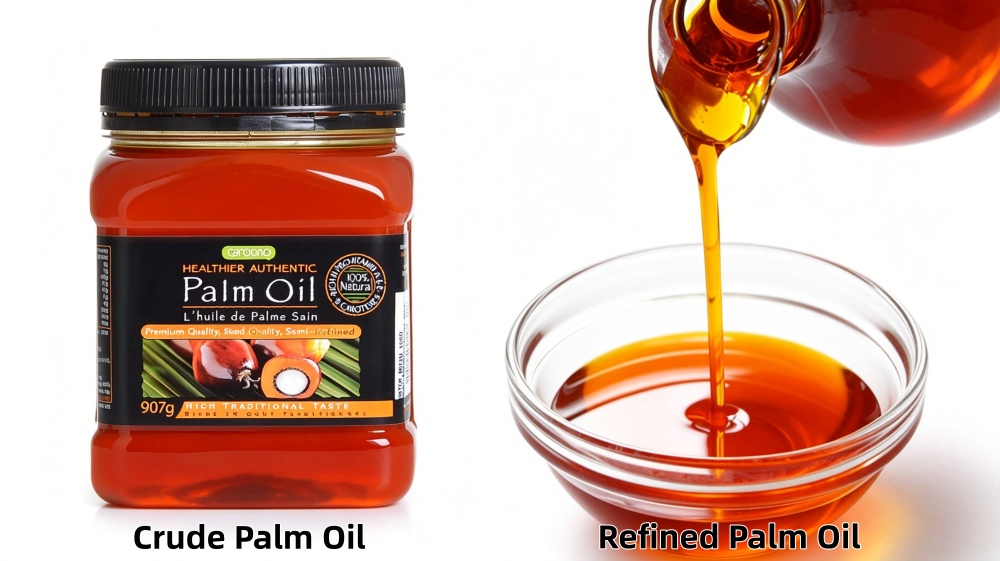 Comparison images of crude palm oil and refined palm oil
Filtering crude palm oil before refining has a measurable effect on refining economics. When CPO is pre-filtered:
(1) Bleaching earth consumption decreases by 15-25%: solids are no longer absorbing active clay meant for pigment removal.
(2) Refining cycle time shortens by 10-20%: clean oil flows faster through deodorization towers and tanks.
(3) Steam and energy usage drops by 8-15%: fewer impurities means faster heat transfer and less energy to reach target temperatures.
High moisture and impurity content are the main drivers of accelerated oxidation and rancidity during storage—particularly critical in tropical climates where temperatures favor oxidative degradation. This makes filtering crude palm oil before refining essential for long-term stability.
Filtered CPO with low moisture and sediment levels:
· Maintains chemical stability for longer periods in bulk storage tanks.
· Resists rancidity development, preserving the target FFA specification at delivery.
· Meets the raw material entry standards required by RSPO and ISO 22000 certification schemes.
Choosing the right pre-refining filter depends on your processing scale, crude oil quality and refining line specifications. Key factors to evaluate:
| Factor | What to Consider |
| Type of filter | Plate-and-frame filter / vibrating screen / leaf filter |
| Mesh or micron rating | Match to your refining equipment precision |
| Throughput capacity | Must match or exceed your extraction output rate |
| Cake discharge method | Manual / semi-automatic / fully automatic |
| Material compatibility | Food-grade stainless steel (SS304/SS316) for oil contact surfaces |
| Cleaning and maintenance | Frequency of filter element replacement and cleaning downtime |
Whether you need a plate-and-frame filter or a vibrating screen, selecting the right pre-refining filtration equipment is the first step toward efficient refining. Contact Henan Glory technical team to get a personalized equipment recommendation based on your CPO quality and production capacity.
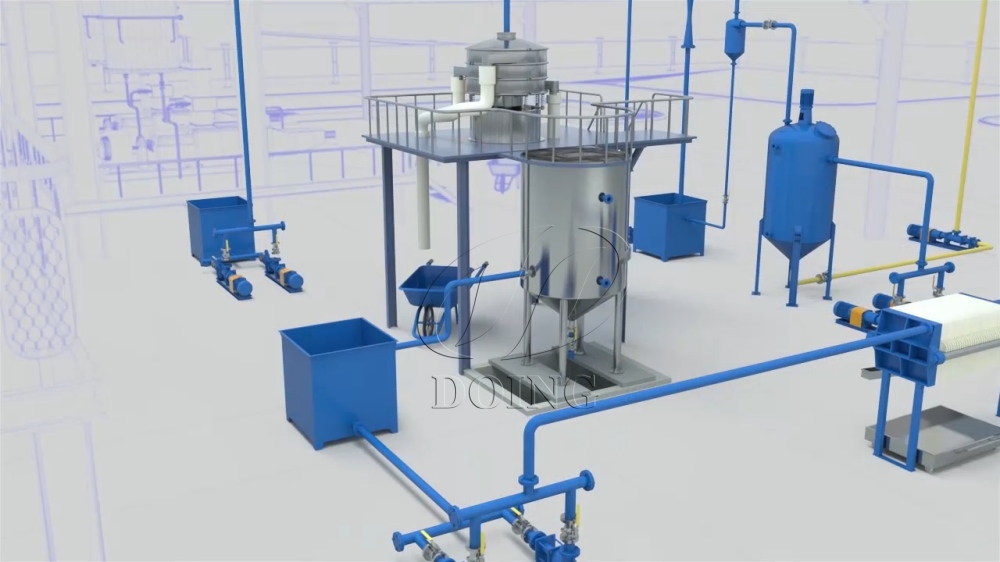 The pre-refining crude palm oil filter
Henan Glory offers a specialized oil clarification system for crude palm oil refining preparation. Heavy impurities such as sand, silt, and fruit shell fragments can settle in the clarification tank and be periodically discharged. The overflow then enters the vibrating screen, where stainless steel mesh removes suspended impurities like pulp fibers and fine residues. Finally, the plate filter acts as the final stage of pre-refining filtration.
Henan Glory has been supplying palm oil processing equipment to markets across Africa, Southeast Asia and South America for over 15 years. Our Nigeria warehouse stocks a selection of filters, extraction and refining equipment for immediate inspection and trial runs. Whether you are setting up a new palm oil processing line or upgrading an existing refinery, we can help you select the right equipment configuration for your crude oil quality and production targets.
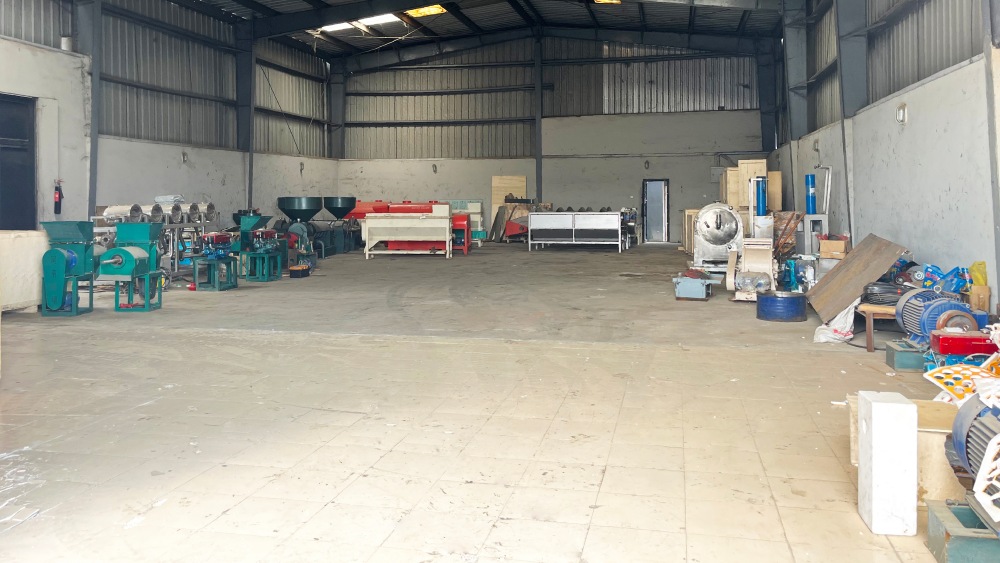 Henan Glory's Nigeria warehouse
Ready to Optimize Your Palm Oil Refining Process?
Contact us today to discuss your filtration needs or schedule a visit to our Nigeria warehouse for a live filtration test with your own crude palm oil samples.
→ Get a Free Consultation
Q1: What mesh size should I use for my crude palm oil filter?
A: The optimal mesh depends on your refining equipment tolerances. Consult your refining equipment manufacturer or contact Henan Glory’s technical team for a specific recommendation based on your crude oil quality.
Q2: How often should the filter elements be cleaned or replaced?
A: This depends on crude palm oil quality and throughput. High-impurity CPO from poor-quality fruits may require daily cleaning, while well-extracted oil may only need cleaning every 3-5 days.
Q3: Do you offer a trial run for a crude palm oil filter before purchase?
A: Yes. You can bring your crude palm oil samples to our Nigeria warehouse for a live filtration test. This allows you to verify filter performance and impurity reduction with your own raw materials before making a purchasing decision.
Please answer the questions bellow before leaving the message. Our sales manager will contact you within 24 hours. And your contact information will be protected!